
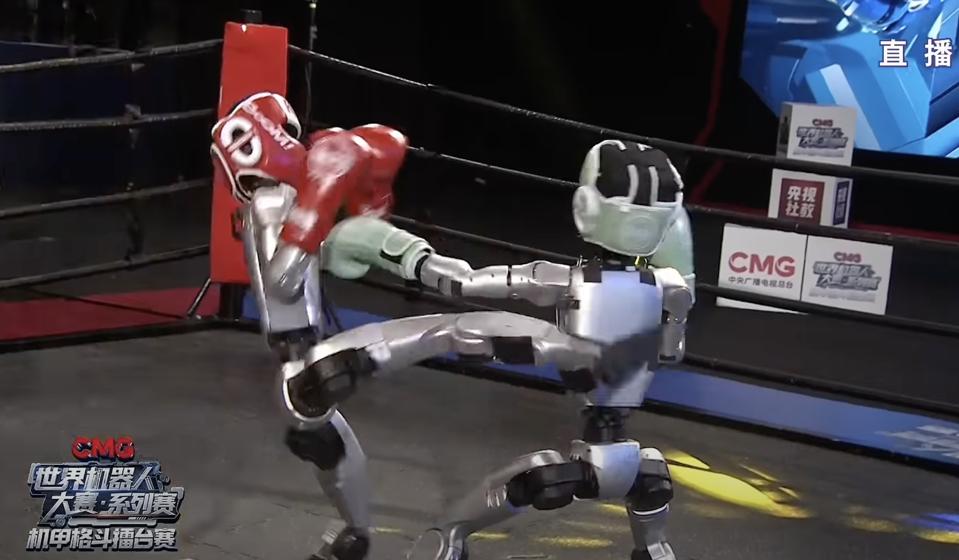
Unitree
The robots, honestly, aren’t yet amazing at punching and kicking each other, and sometimes fall off-balance while attacking or defending themselves. But, like the humanoid robotic half-marathon held in Beijing in mid-April, it’s a start.
And with the pace of innovation in humanoid robot development, it’s going to get much better.
The kickboxing match featured four Unitree G1 robots, which are relatively small for humanoid robots at just over four feet tall and under 80 pounds in weight. Their punches generally lacked power because the G1 robots are fairly slow, meaning they essentially pushed each other with their boxing glove covered hands rather than actually snapping a punch with pace into their opponent’s heads.
Kicks were similar, and some kneeing attacks just hit thin air as their robotic opponent spun out of the way. However, the G1s featured excellent return-to-standing ability after slipping or being knocked down, even when getting tangled up in the boxing ring ropes.
For now, the humanoid robot kickboxing competition is something interesting, but not for its combat entertainment value. There isn’t a huge amount of that, but the fact that the robots are fighting at all is astonishing.
And it’s somewhat promising.
I love combat sports, but it’s a guilty pleasure. I’ve mostly stopped watching mixed martial arts competitions, because it’s just so destructive to human health and wellbeing: two fighters who have trained themselves to the peak of human strength, flexibility, and capability proceed to utterly destroy each other, with potentially long-term health and wellbeing impacts, particularly to their brains.